Source: Agora Pulse
Facebook recently launched news feed ads that direct people to chat directly with your brand on Facebook Messenger.
Great, isn’t it? We all want more engagement, and this is as direct as it gets. In this article, we will share Charli Day’s first Facebook Messenger ad experience and answer some frequently asked questions along the way.
Why should I care about Messenger?
– 11% of the world’s population uses Messenger every month.
– 22 million GIFs are sent daily on Messenger.
– 1 billion B2C messages are sent every month.
The Experiment
Charli allocated $20 over a four-day period to promote her own website using Messenger ads. Historically, she has experienced a CPL (cost per lead) of around $2.70 and a CPC (cost per click) as low as 10 cents using the “send to website” advertising model. This means that with a $20 spend and the right message, she could receive up to 7 potential customer inquiries.
How do Facebook Messenger Ads work?
As an advertiser, I traditionally had a number of ways I could direct users to engage with my brands, with options like liking our page, visiting our website, or downloading an app being the most popular. Now I can select Messenger as a destination in the website clicks objective and use the “Send Message” call to action.
All clicks from these news feed ads will open directly in a Messenger thread with a copy of the ad inserted.
An example of a business account
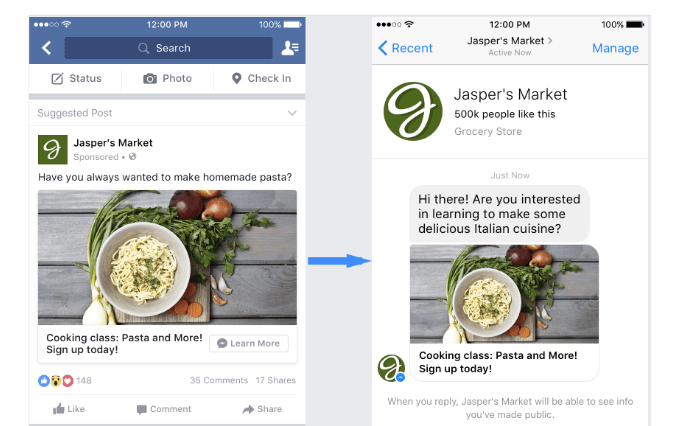
The first image above looks like a typical Facebook feed ad, but click the thumbnail and it will take you to a conversation within Messenger. The user is presented with your pre-prepared message or bot and can choose to reply and continue the conversation.
How can I manage ad traffic in Messenger?
If you are familiar with running ads on Facebook, then this should be a breeze. Here is a step-by-step guide:
1. Go to ad creation in Ads Manager or Power Editor.
2. Select the Traffic objective.
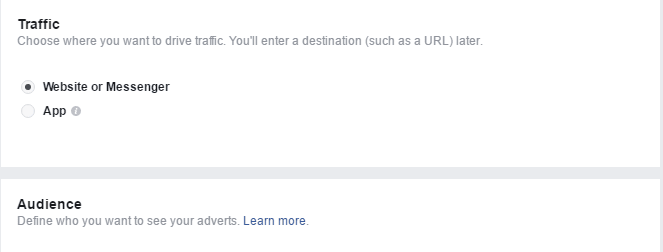
- Choose your campaign name and click Continue.
4. Choose your audience, budget, and placement.
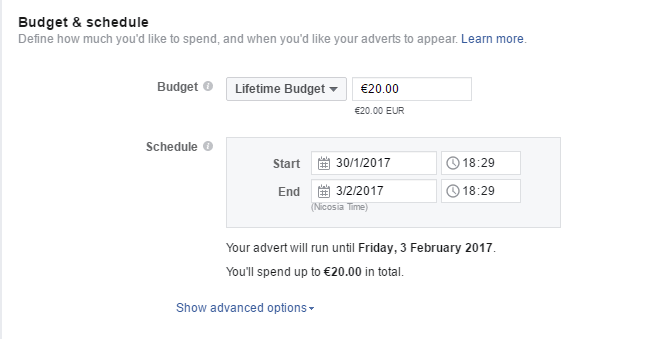
- Choose an image, a single video, or a slideshow format.
- Choose your business page.
- Select Messenger as your destination.
- Write the welcome text.
- Place your order.
What text should I use?
Here is your detailed ad below, and as you can see, there are various spaces to add your text.
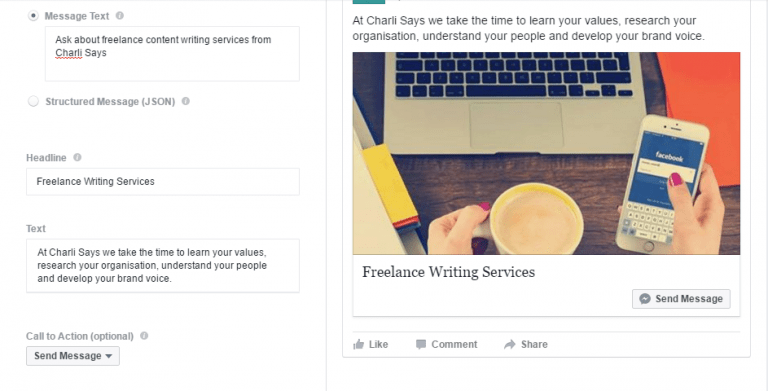
The text you write will be seen at different stages of the customer journey. Here are the basics:
Text: appears above your ad, so it needs to be very punchy to make people click.
Message Text: this is the message users will see in Messenger after clicking your ad.
Headline: This is the short, catchy title that appears below your image.
News Feed Link Description: This is the 150-character meta description pulled from your website. You can overwrite this to provide more details about your promotion or offer.
Her Verdict
So, back to my experiment. With my Messenger ad placed, I sat back and eagerly awaited messages to start pinging in my page’s inbox.
Nothing.
I checked several times to ensure the ad was actually running, and sure enough, it was… well, it was certainly eating dollars! After 24 hours, with 7 link clicks at a cost of $1.59 each and a total spend of $11.10, I had received zero messages. Every penny counts, so I decided to stop the ad and evaluate where I might have gone wrong.
The Lessons
Nothing is a failure if you learn from it, right? Here are the lessons I took away from my Facebook Messenger experiment.
Is the offer important?
There was no special offer in her ad and no sense of urgency for people to get in touch. She had aimed for a simple “find out more” ad, which clearly didn’t work. Yes, the offer is important.
Are web clicks better for certain brands?
Freelance content management and writing are much-needed business services, but ones that many clients choose by looking at the work displayed on your website. It is possible that brands selling purchase items might fare better with a Facebook Messenger ad than those offering ongoing professional services.
Are Facebook Messenger ads too “in your face”?
Perhaps it’s her Britishness, but there’s something distant and civilized about looking at a brand’s Facebook page or website before making a decision or asking a question. Are consumers ready to ask a question after seeing an ad in their feed, or do they just click the link and then close it when they realize it takes them to Messenger?
Is your wording important?
Yes, perhaps even more so in Messenger ads than those that lead consumers elsewhere. That’s because there’s no other place to read about your product, so you need to get the point across very eloquently. You also need to ensure they are intrigued enough to keep conversing with you.
In conclusion, while it didn’t work for her, we believe Facebook Messenger ads could be very beneficial for certain brands. Pay special attention to your wording and the offers you are showcasing, and try your luck.