
Source: Agora Pulse
They say to always keep your friends close and your enemies closer, right? This is also true when it comes to monitoring your Twitter competition. Since you and your competitors are going after the same audience, following their movements can be highly beneficial for shaping your own strategy. While it may seem counterintuitive to follow your competitors, as you don’t want to appear desperate or intrusive, there are many ways to do so without their knowledge. Here are some sneaky ways to keep tabs on your Twitter competition—without them ever finding out.
Conduct some research
The primary way to find other relevant people to follow is by looking at people whose content I like, and checking who they are following, as well as who is following them.
This works the same way with competitors. Go to their Twitter accounts and check their follower and following lists. Follow any relevant parties on either list.
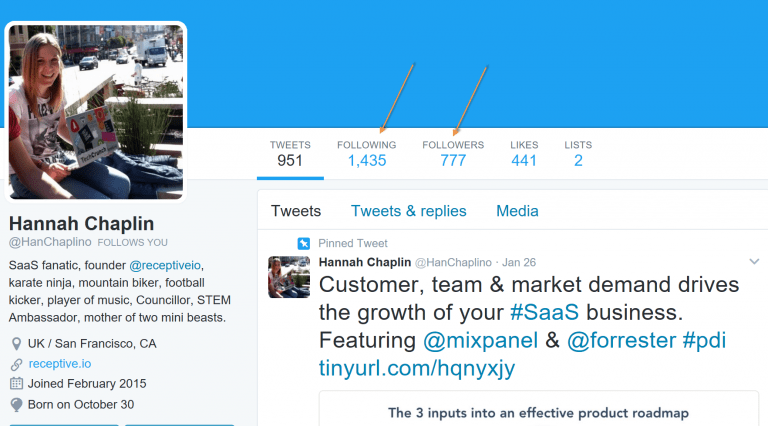
Odds are, the people on either or both of these lists would be a good fit for your brand.
You can gain some solid intelligence by checking who your Twitter competition is talking to and how active they are on the channel.
Twitter now defaults to showing only a user’s outgoing tweets, and not their replies. To see the replies, go to their Twitter account and click on the “Tweets & Replies” option. (This works best on a desktop.)

You will then be able to see any conversations they are having and with whom. Follow the people they are talking to!
These are clearly active Twitter users, so establishing equally powerful relationships with them can reap rewards for you, too.
If you identify some key partners they regularly engage with, perform a search for both your competitor and that person to locate historical data on their conversations.
This way, you can evaluate the relationship and determine if there are opportunities for you to fill the gaps your competition may have missed.
Utilize Twitter lists
A great tactic I use is creating Twitter lists. Lists can be public or private, but for the purpose of monitoring competitors, private is the way to go.
To create a list via the web:
1. Click on your profile icon to display the drop-down menu.
2. Click on Lists.
3. Click on Create new list.
4. Select a name for your list and a brief description. Then, select whether you want the list to be private (only accessible to you) or public (anyone can subscribe to the list).
5. Click Save list.
To add or remove people from your lists:
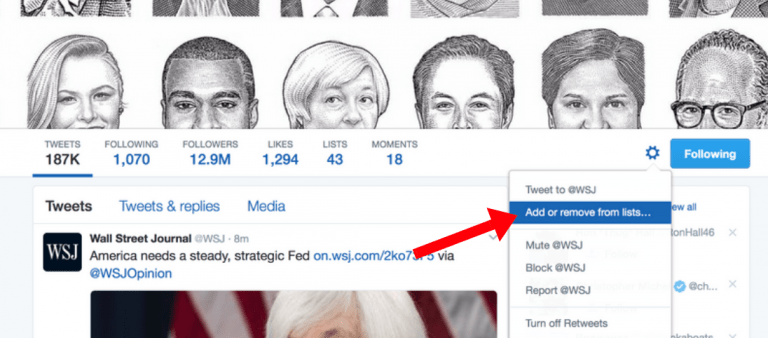
- Click on the gear icon on an account’s profile to display the drop-down menu.
- Select Add or remove from lists. (You do not need to follow an account to add them to your list.)
- A pop-up window will appear showing your created lists. Click the checkbox next to the lists you want to add the account to, or uncheck the lists you want to remove the account from.
- To check if the account you wanted to add was correctly included in that list, go to the Lists tab on your profile page. Click on the desired list and then click on List members. The account will appear in the members list.
This works well for evaluating competitors you know, as well as those you might not. For example, following certain relevant industry hashtags can allow you to learn about new players in the market that may be worth exploring.
I often create a variety of private lists for my clients. These lists often include categories such as partners, customers, leads, and, yes, competitors.
It is also worth exploring whether your competitors have public lists that may be beneficial to browse.
Use the big guns
Many social media dashboards also offer more detailed information on your competitors’ online behaviors.
The Agorapulse Twitter report card offers analytics specifically designed to show if you are performing better than your competitors on Twitter. Even better? It’s free!
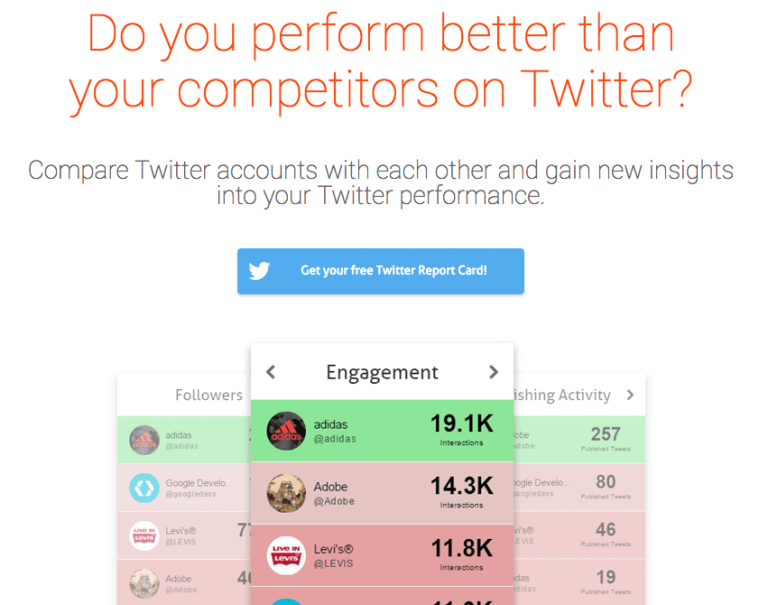
Is your Twitter competition more active than you? That is a good excuse to step up your game.
Are you more active than they are, but perhaps their conversation rate is higher? Work on ways to incorporate more conversations into your communications to level the playing field.
Between following your competitive set and who they are talking to, creating specific Twitter lists, and using advanced dashboards to compare yourself with the rest, you are ready to outperform your competition in no time!